【Even Beginners Can Do It】Complete Guide to Grilling Delicious Steak
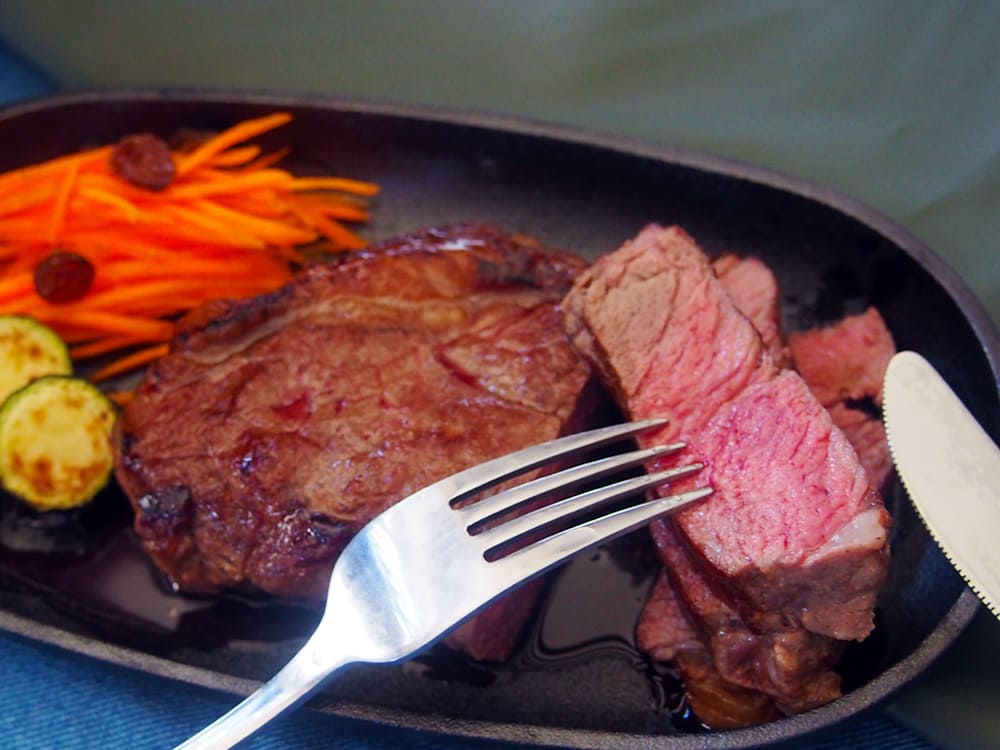
When you cook steak at home, have you ever failed to achieve the ideal doneness like a restaurant, resulting in it being undercooked or overcooked? This time, we will explain in detail how to cook a delicious steak, even for those who don't usually cook.
Which do you prefer? Types of Steak Doneness
"Delicious steak doneness" varies from person to person. So, let's first check your ideal steak doneness! Here are three commonly heard types of doneness.
・Rare
This doneness involves searing the surface of the beef at a high temperature, leaving the center of the steak almost raw. You can enjoy the "chewy" texture of the meat.
However, unless you have confidence in your stomach, it is best to avoid eating beef rare by yourself.
・Medium
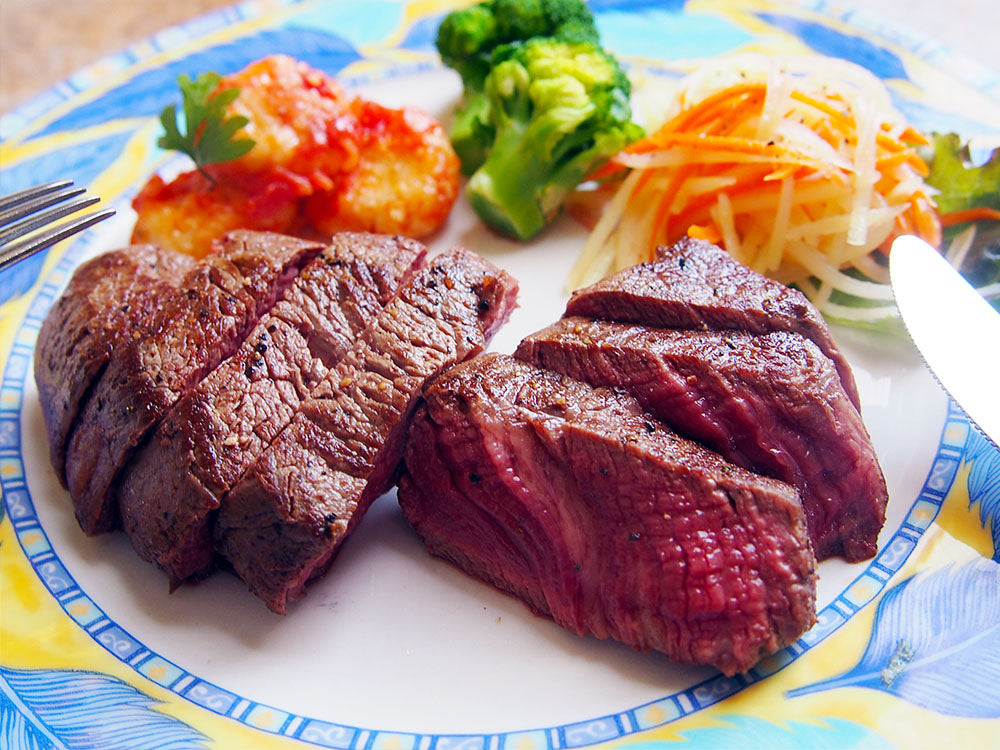
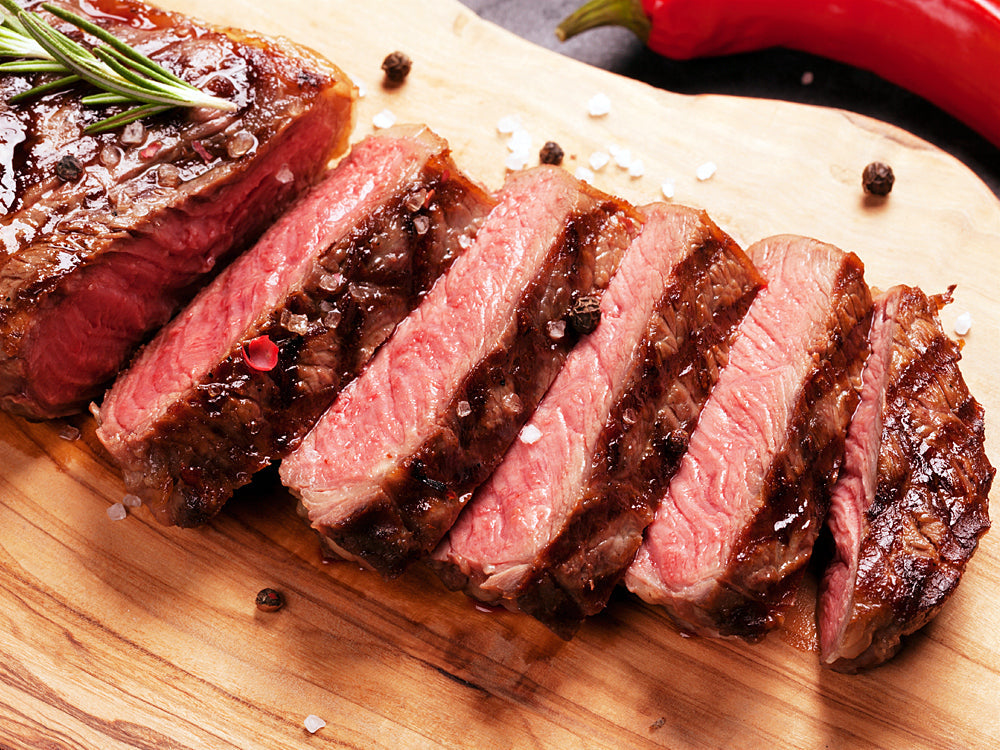
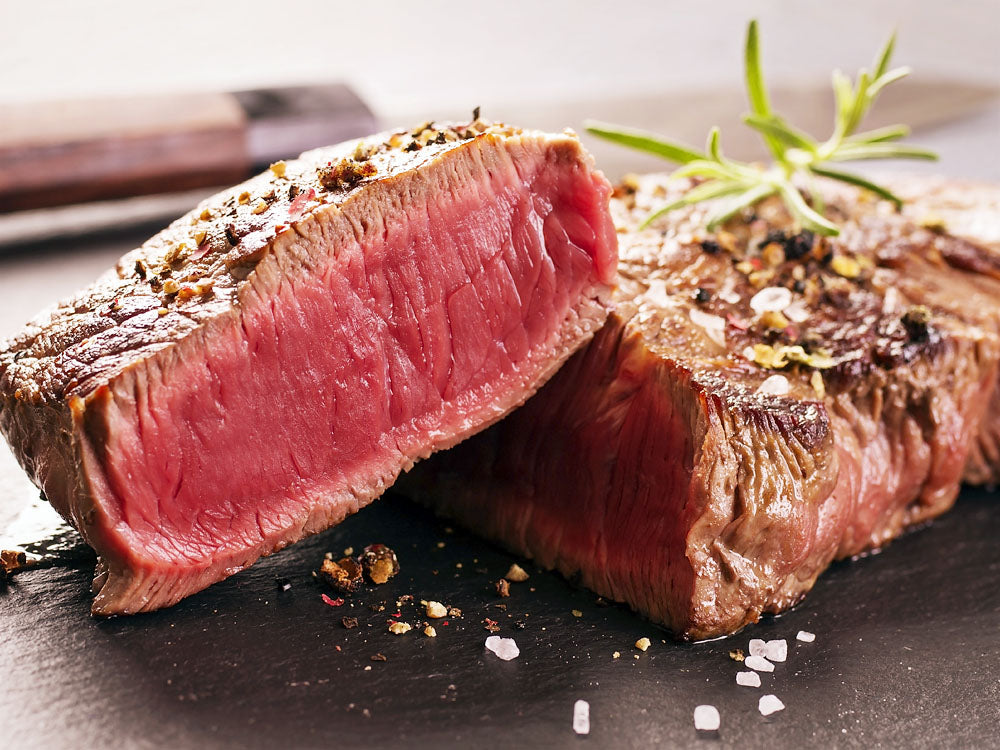
This doneness means the heat has reached the inside of the steak, but the center of the meat remains pink. It can be difficult to replicate this exquisite doneness at home without knowing the tricks, so it can be said to be a doneness that highlights the chef's skill.
By the way, "medium-rare" is a doneness that is closer to rare than medium.
・Well-done
This term means "well cooked" and refers to a doneness where the center of the meat has turned brown. To cook it thoroughly, sear both sides well in a preheated pan, then cover the pan and steam it.
Some people may be hesitant to eat medium or rare steak. Perhaps it's because they were told as children, "If meat isn't thoroughly browned, you'll get a stomachache." While that's not entirely wrong, it's also true that beef is a relatively low-risk food.
In the case of pork and chicken, there is a risk of parasites, viruses, and bacteria lurking inside the meat. Therefore, raw pork should never be consumed, and raw chicken should also be avoided unless it is specifically labeled "for raw consumption."
On the other hand, for beef, bacteria are not originally present inside the meat. However, there are many food poisoning bacteria in the internal organs, and there is a risk that bacteria may have splattered from the internal organs onto the meat during processing. Although splattered bacteria may penetrate into the meat, bacteria on the surface of the meat are eliminated by cooking, so it is important to sear the surface thoroughly until it is well browned.
Furthermore, when cooking a thick cut of steak, heating the surface of the meat, including at least 1 cm into the block, at 60°C for 2 minutes can reduce the number of bacteria to less than 1/10,000, even if bacteria have penetrated into the meat. Therefore, if you can heat it at 60°C for 2 minutes or more, you can say that the risk of food poisoning can be suppressed as long as the meat has not spoiled. If you carefully achieve this "60°C for 2 minutes or more" doneness, the center will be a delicate pink, achieving a medium doneness.
(Reference: Government Public Relations Online "Please be careful! Food poisoning from raw or undercooked meat" https://www.gov-online.go.jp/useful/article/201005/4.html)
How to Cook Medium-Rare Thick-Cut Steak at Home!
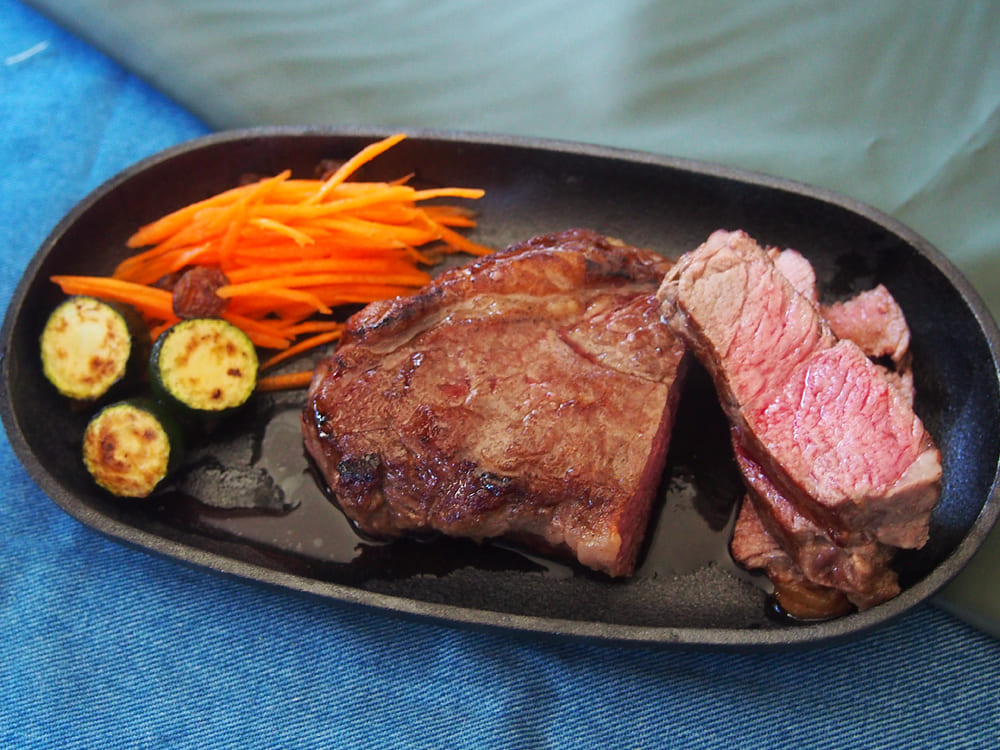
This time, we will introduce tips for cooking "thick-cut steak," which is often perceived as difficult to cook at home, to a "medium" doneness. The key is to strictly follow the preparation steps.
- <Preparation>
-
- 1. Transfer frozen steak to the refrigerator and thaw slowly over 24 hours.
- 2. Take the steak out of the refrigerator 30 minutes before cooking and bring it to room temperature.
- 3. Cut the sinews between the meat and fat in several places with a knife.
- 4. Thoroughly pat dry any drips (moisture) that have seeped out of the meat with kitchen paper.
- 5. Just before cooking, sprinkle salt and pepper on one side of the steak.
- <Cooking Method>
-
- 1. Grease a frying pan with oil and heat over medium heat.
- 2. When faint smoke starts to rise from the pan, gently place the steak, seasoned side down. Be prepared for the meat's moisture to splatter at this time.
- 3. Cook the meat without touching it for 1 minute, then check for browning. When it's nicely browned as shown in the photo and about 1/3 of the meat has turned brown, flip it over.
-
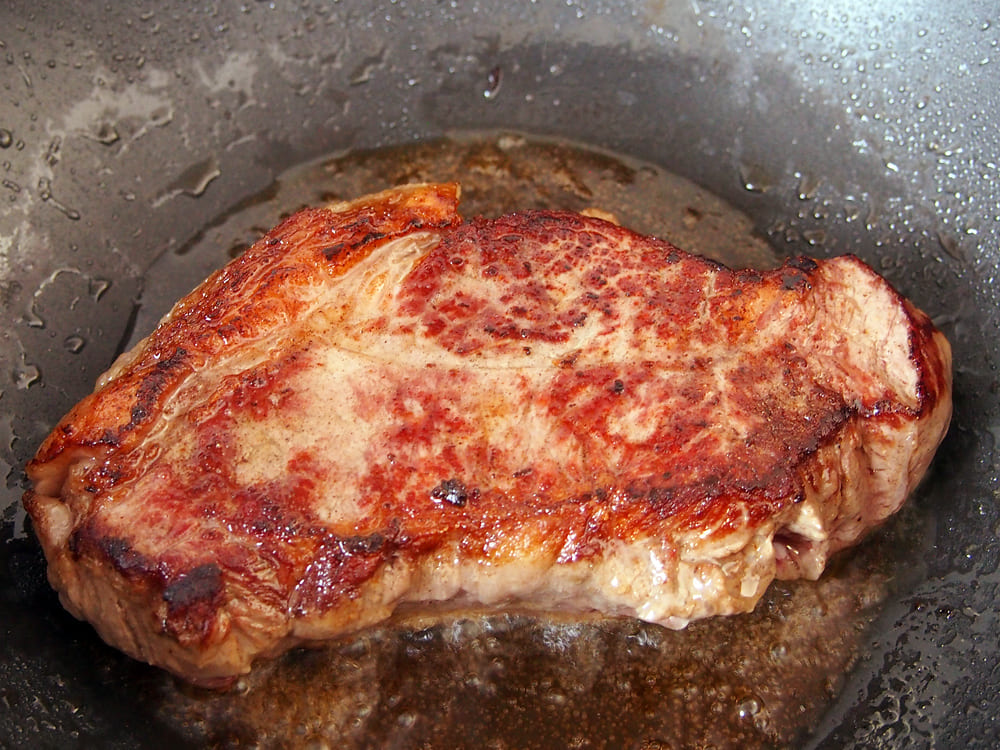
- 4. After flipping, sear for 30 seconds over high heat, then cover and cook over low heat for 2 minutes.
- 5. Press the center of the meat with your finger. If the meat springs back with elasticity, remove it from the pan and wrap it in aluminum foil. If it doesn't spring back, cover and heat over low heat for 1 minute.
-
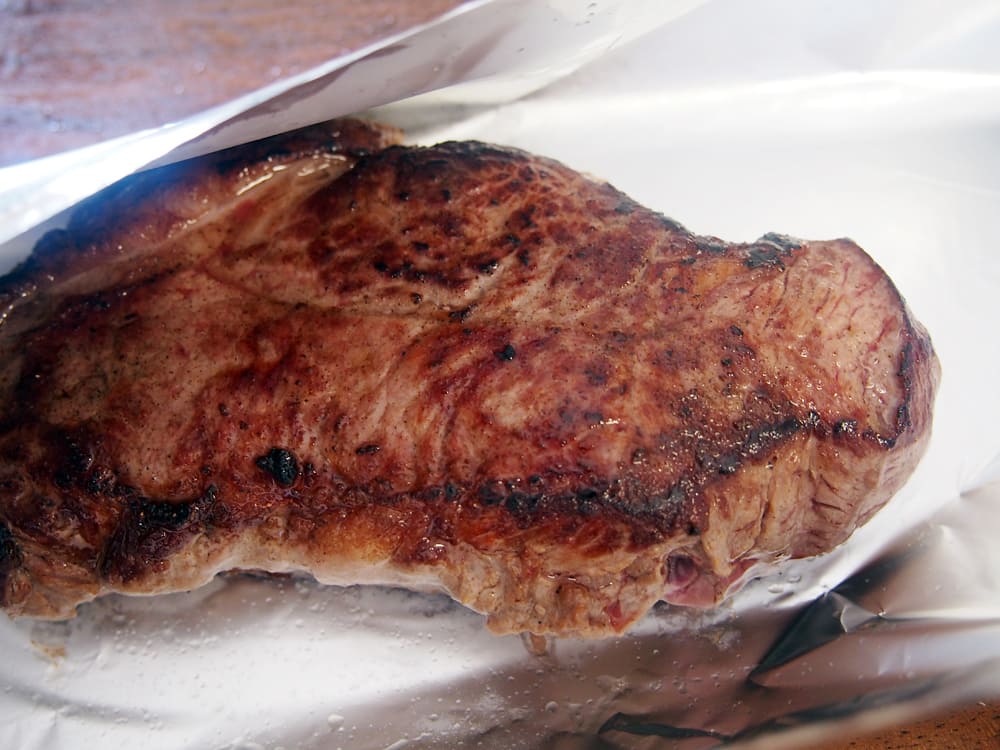
- 6. Leave it wrapped in aluminum foil for 5 minutes to cook through with residual heat. Cut into your preferred size and serve.
※This steak is approximately 2cm thick. If your cut of meat is thicker than this, try cutting it to a similar thickness before cooking.
Easy Side Dishes! Vegetable Recipes Perfect for Steak
Have you finished your mental rehearsal for cooking a delicious steak? Since steak alone can lead to an unbalanced diet, we'll finish by introducing some easy vegetable side dishes! If you prepare your side dishes beforehand, you can enjoy them with your steak while it's still warm.
Cheesy Mashed Potatoes (2 servings)
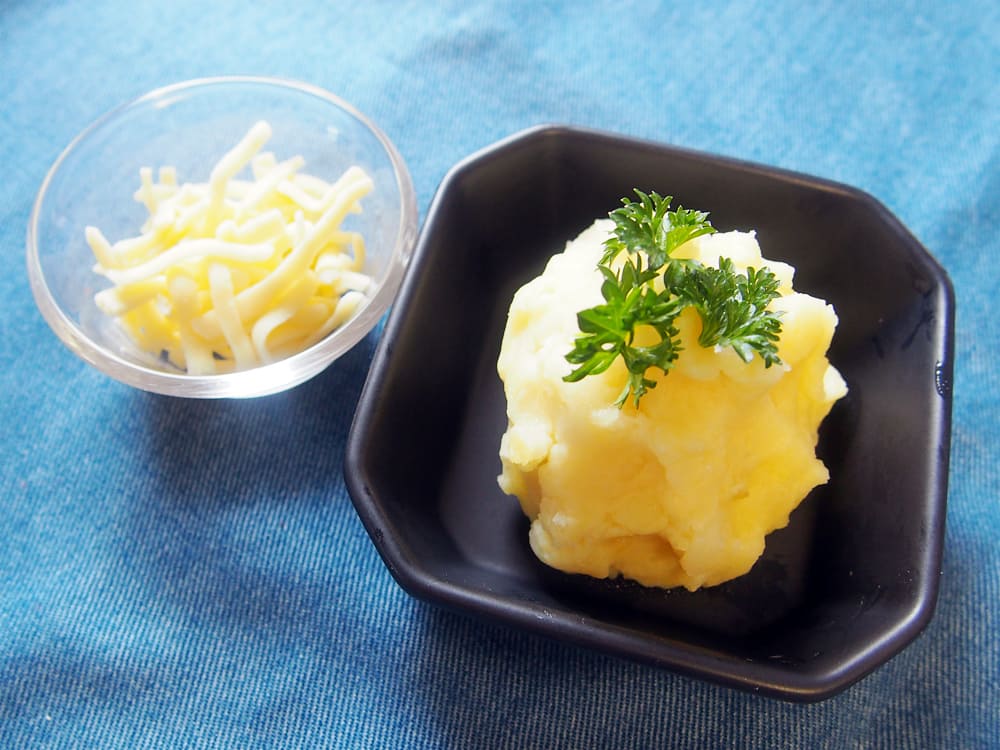
Steam or microwave 1 medium peeled potato until soft, then mash with 1 tbsp shredded cheese, 1 tbsp milk, 1/2 tsp sugar, and a pinch of salt.
Grilled Vegetables (2 servings, approx. 300g total vegetables)
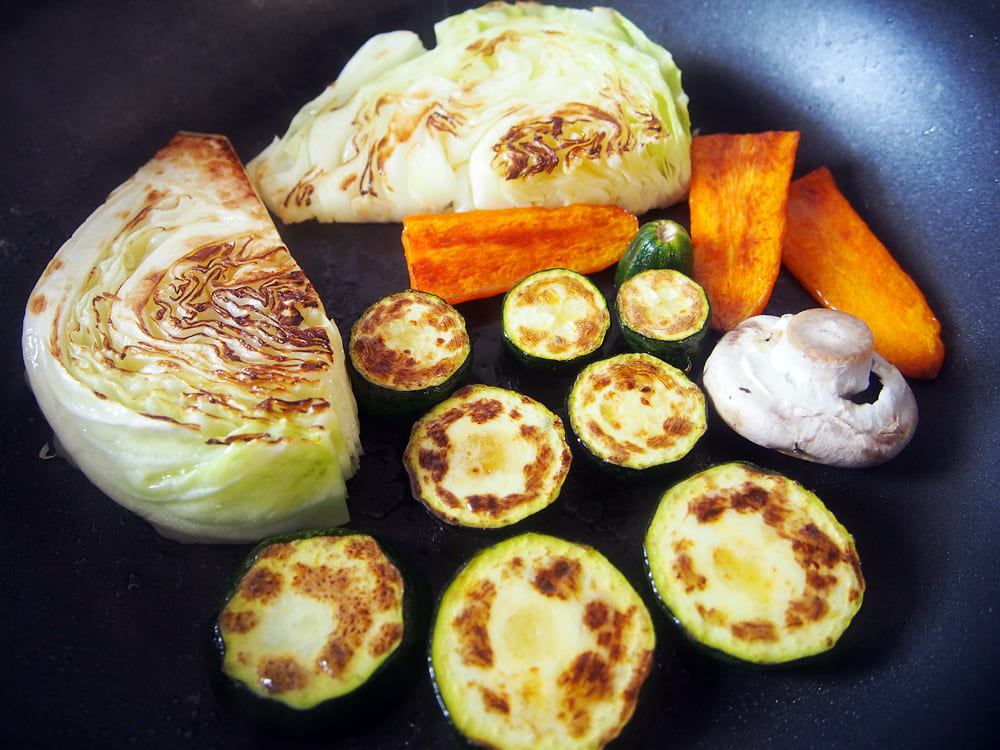
Hard root vegetables should be pre-boiled or microwaved until soft. Turnips, zucchini, onions, eggplants, and mushrooms can be grilled raw.
Heat olive oil in a pan over medium heat. Once one side of the vegetables is grilled, flip them, cook for 30 seconds, then add 1 tablespoon of water, cover, and steam. Once the water has evaporated with the lid on, wait 1-2 minutes, then turn off the heat. Serve on a plate and sprinkle with a little salt.
Carrot Rapee (2 servings)
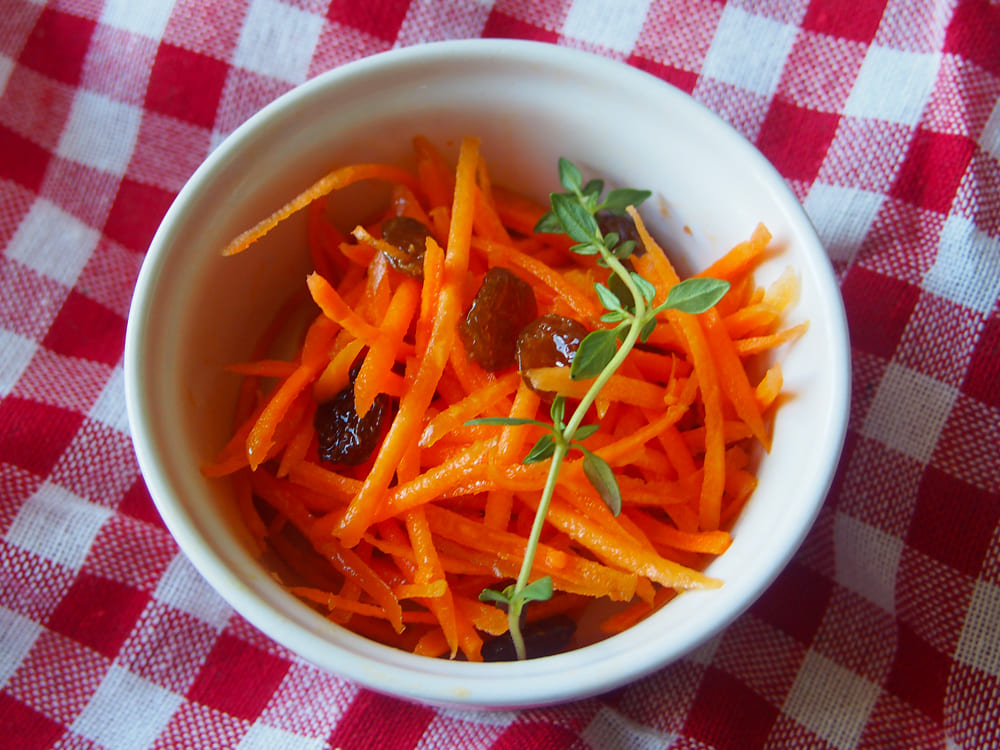
Shred 1/2 carrot with a shirigiri grater (a tool for shredding carrots) and mix with 1 tbsp raisins, 1 tbsp olive oil, 1 tbsp vinegar, and 1/4 tsp salt. You can also add herbs if you like.
Make a Medium-Rare Thick-Cut Steak at Home!
We've shown you how to cook a delicious medium-rare thick-cut steak. While cooking a medium-rare steak is often considered difficult, you can make a beautifully seared steak at home using the method we introduced! Why not give it a try with these vegetable recipes?
References:
Standards for raw edible meat and beef liver | Food Hygiene Window
Please be careful! Food poisoning from raw or undercooked meat | Government Public Relations Online
How to avoid meat-related food poisoning? | Ministry of Health, Labour and Welfare
Products used in this recipe
 Grass-Fed Beef Ribeye Steak
Grass-Fed Beef Ribeye Steak
¥2,080~
View product
 Grass-Fed Beef Striploin/Sirloin Steak
Grass-Fed Beef Striploin/Sirloin Steak
¥1,920~
View product
 The Meat Guy's Original Steak Spice Mix
The Meat Guy's Original Steak Spice Mix
¥650
View product
 Frozen Baby Carrots (500g)
Frozen Baby Carrots (500g)
¥1,480
View product
The Meat Guy's Recommended Products
 USDA Choice Ribeye Steak (350g)
USDA Choice Ribeye Steak (350g)
¥5,780~
View product
 USDA Choice Striploin Steak 350g
USDA Choice Striploin Steak 350g
¥5,300~
View product
 Grass-Fed Beef Filet Mignon
Grass-Fed Beef Filet Mignon
¥3,150~
View product
 Grass-Fed Beef Rump/Top Sirloin Steak (250g)
Grass-Fed Beef Rump/Top Sirloin Steak (250g)
¥2,130
View product
 Grass-Fed Beef One Pound Ribeye Steak (Over 450g!)
Grass-Fed Beef One Pound Ribeye Steak (Over 450g!)
¥5,440~
View product